Alfred the Great
-
Entry #19 in project #EuropeanBios is the English king Alfred the Great, who compared to some previous The Greats (Alexander, Charlemagne) is some really weak tea. More like Alfred The Barely Adequate. He took a huge defeat, declared it victory, then enacted some worthy reforms.
-
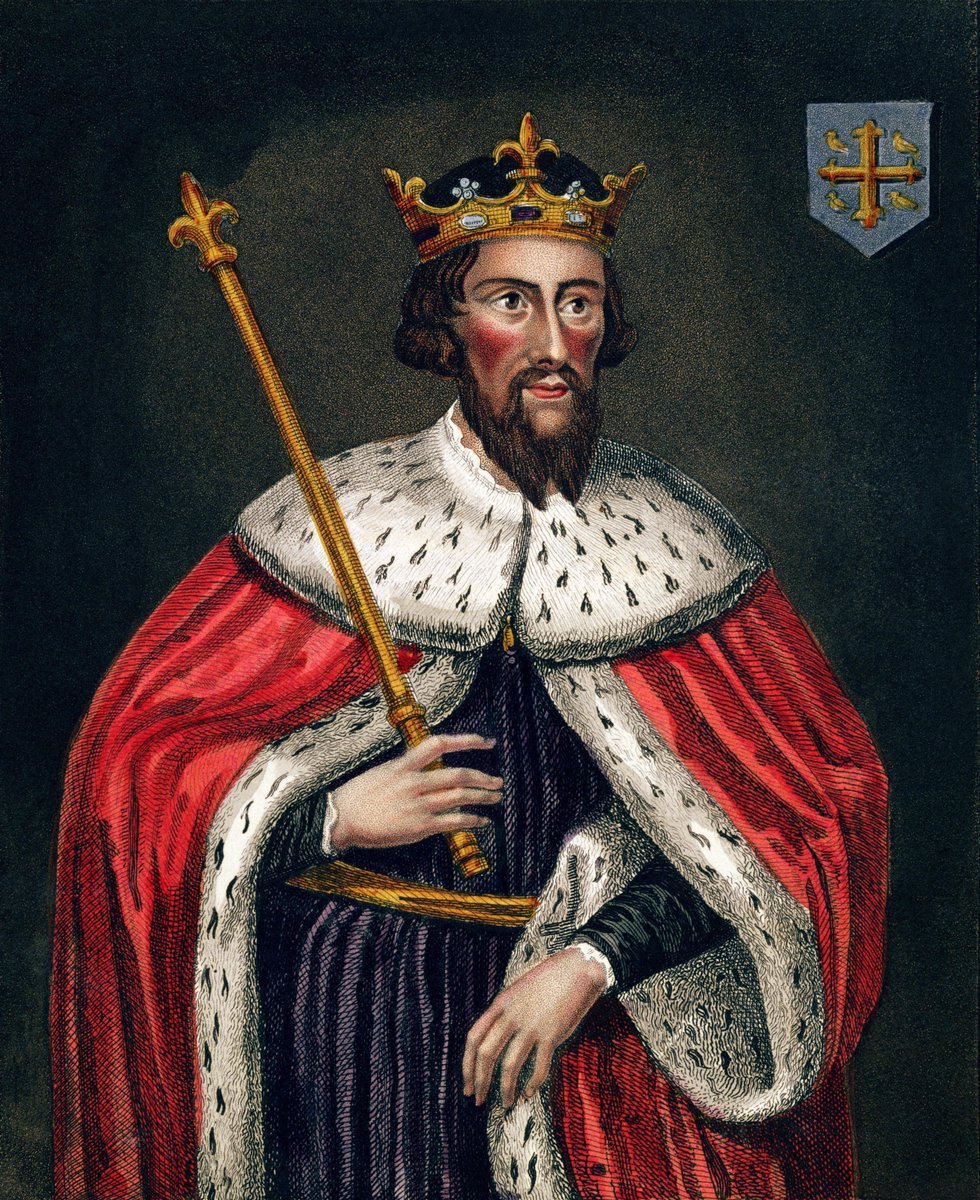
King Alfred the Great, from 'The National and Domestic History of England' by William Aubrey, c.1890. Public domain. From "The National and Domestic History of England" by William Aubrey, c.1890. -
Alfred (or Ælfred) was born around 848, so a little after our last subject, Ivar the Boneless. His dad Æthelwulf was king of Wessex, and he had three older brothers, Æthelbald, Æthelberht and Æthelred. Being fourth in line to the throne, he would not have expected to become king.
-
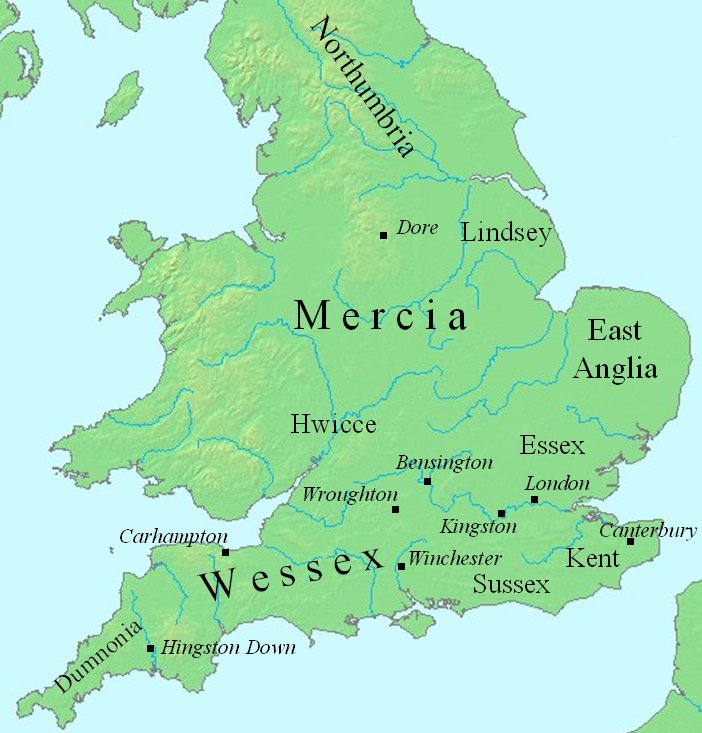
A map of Anglo-Saxon England showing the kingdoms at the time of Alfred the Great. Public domain. Map by Mike Christie via Wikimedia Commons. -
Fun fact: "Æthel" means "Noble". So Alfred's dad's name meant Noble Wolf, his brothers Noble and Bold, Noble and Bright, and Noble Counsel. "Ælfred" means "elf-counsel", the only kid not to be called "Noble", suggesting maybe they did not expect great things from him.
-
But it turned out his brothers were short-lived. After wolf-dad died, Æthelbald lasted only 5 years as king before kicking it, Æthelberht managed only another 5 years, and Æthelred became king just as a gigantic army of Vikings arrived, so he too was dead six years later.
-
This left Alfred unexpectedly king at age 17, and also immediately threatened by a horde of Vikings: the Great Heathen Army, led by our good friend Ivar the Boneless himself. When I say "immediately" threatened: he had to abandon his brother's funeral to deal with the invasion.
-
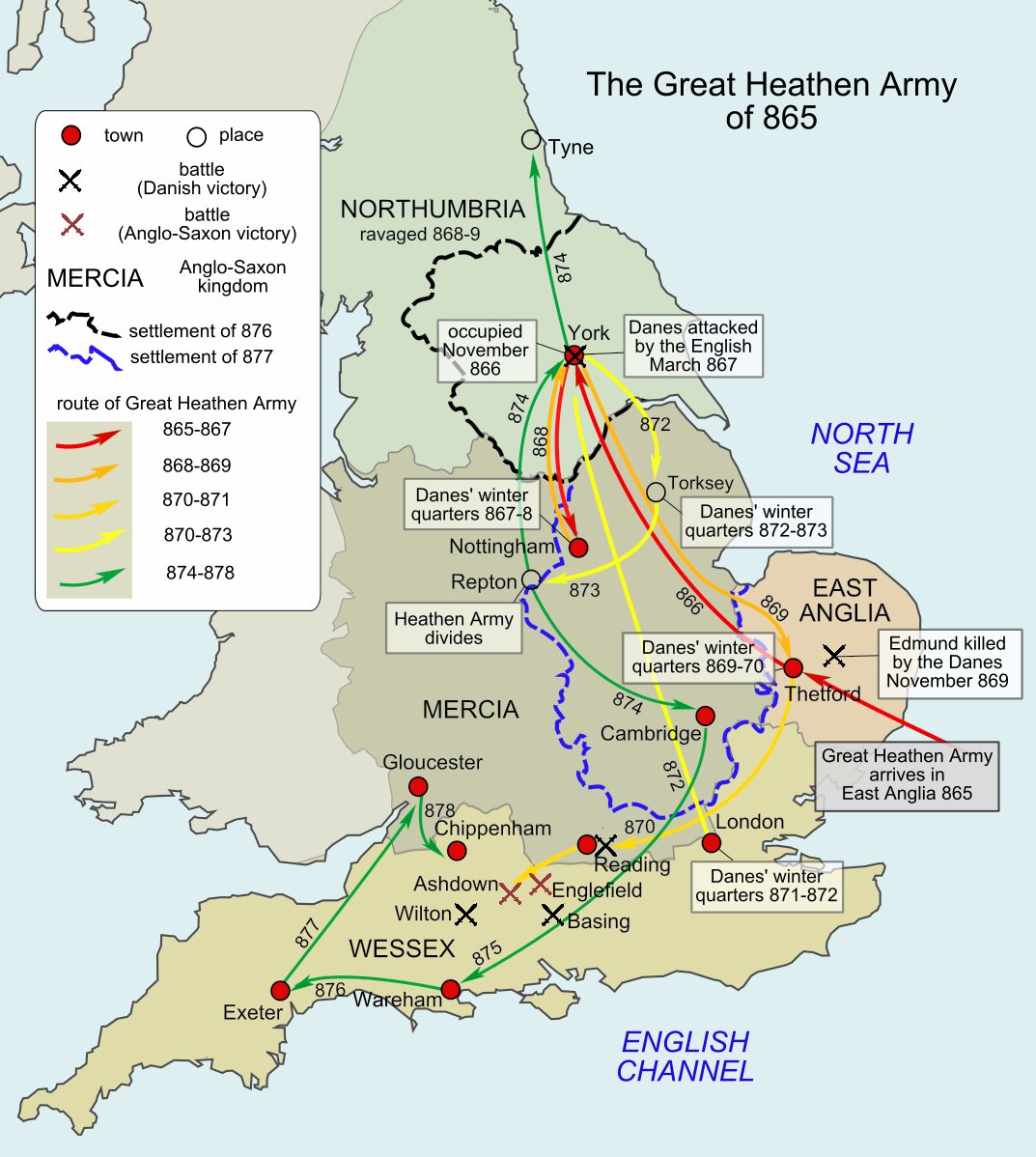
The route of the Great Heathen Army through England, 865–878. CC BY-SA 3.0 Wikimedia user Hel-hama. -
If this were a story then young Alfred would rise to the challenge and defeat the invaders in the name of his dead brother, but this is reality, so what he actually did was surrender a huge chunk of Britain to them and pay a huge bribe to get them not to invade any further.
-
This left the Vikings lords of a big chunk of the land and Wessex the lone remaining hold-out in 876. Alfred bided his time for two years and in 878 he counter-attacked, beat the shit out of the Vikings and got a treaty of peace out of them, including control of London.
-
But we should be honest here, this was not some great conquest. He didn't even get back all the bits they stole! The treaty created the Danelaw, a massive Viking-ruled chunk of Britain. Alfred got a couple bits back, but the Vikings were very much a permanent presence thereafter.
-
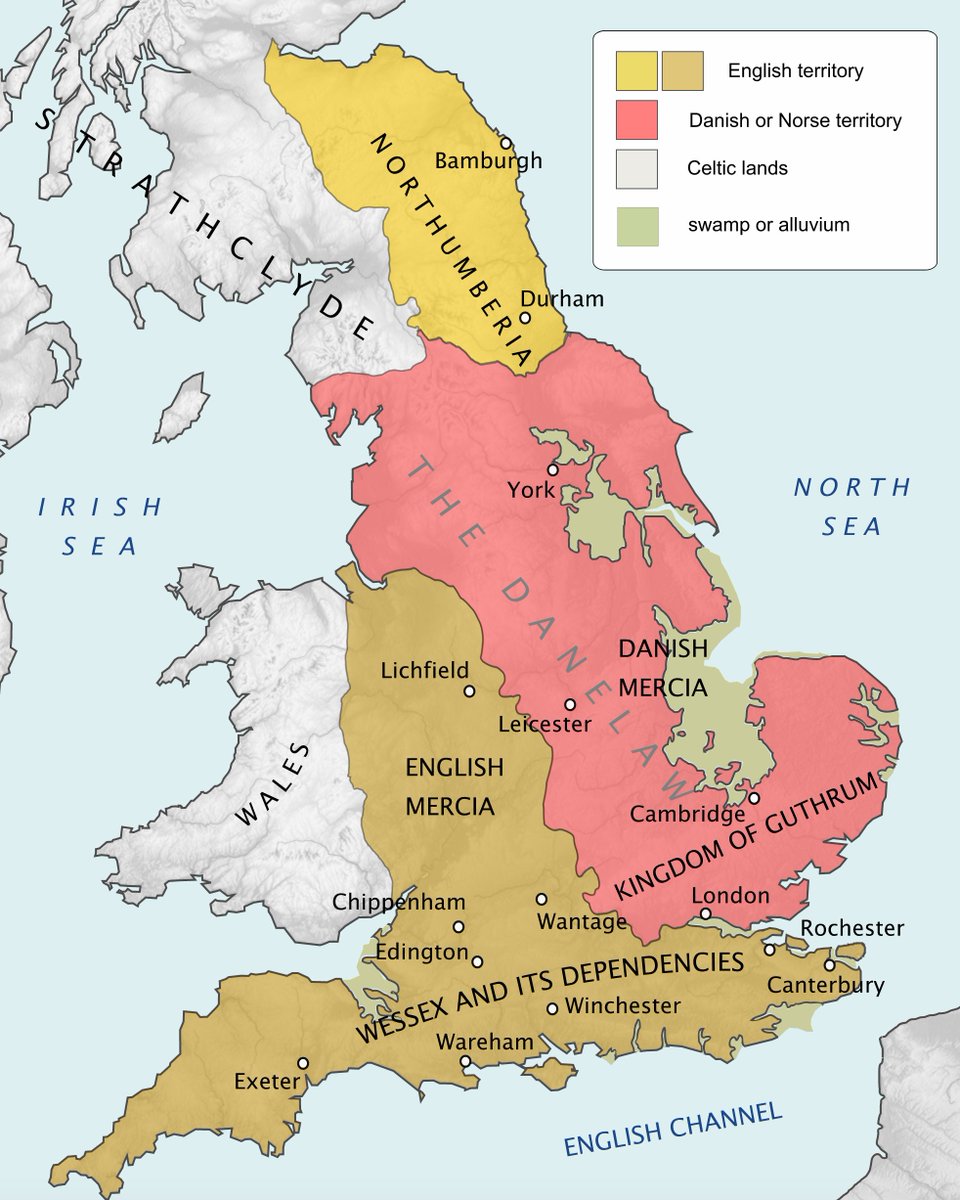
England after the Treaty of Chippenham (878): English territory in gold, Danish/Norse territory in red. CC BY-SA 3.0 Wikimedia user Hel-hama. -
To his credit, after reaching what I am going to charitably call a stalemate, he got a lot of governing done. He made tedious but important reforms to education, taxation, the law, and the military. The sort of stuff that nobody writes songs about but people really appreciate.
-
It's probably the tedious day-to-day stuff that made him popular, in the same way that Charlemagne's governing made him popular. And like Charlemagne, there was no model for a boring, efficient king, so after his death his decidedly poor military results were called triumph.
-
Alfred is credited with shaping British history, but honestly, he got overrun by Vikings and they got overrun by the Normans two hundred years later and the resulting mish-mash culture would probably have turned out much the same whether or not the Vikings had taken Wessex.
-
Compared to the other The Greats, Alfred remains decidedly unimpressive. Alexander took India, Charlemagne took Italy, Alfred barely managed to hold on to Surrey and had to break his own treaty to do it. The Vikings stayed forever and became a permanent part of British culture.
-
After Alfred, British history gets a bit better at writing things down, but it's mostly quite dull so instead our next thread will head over to the Vikings again and Erik The Red, who was an entertaining rogue who probably was the first European to visit North America.
-
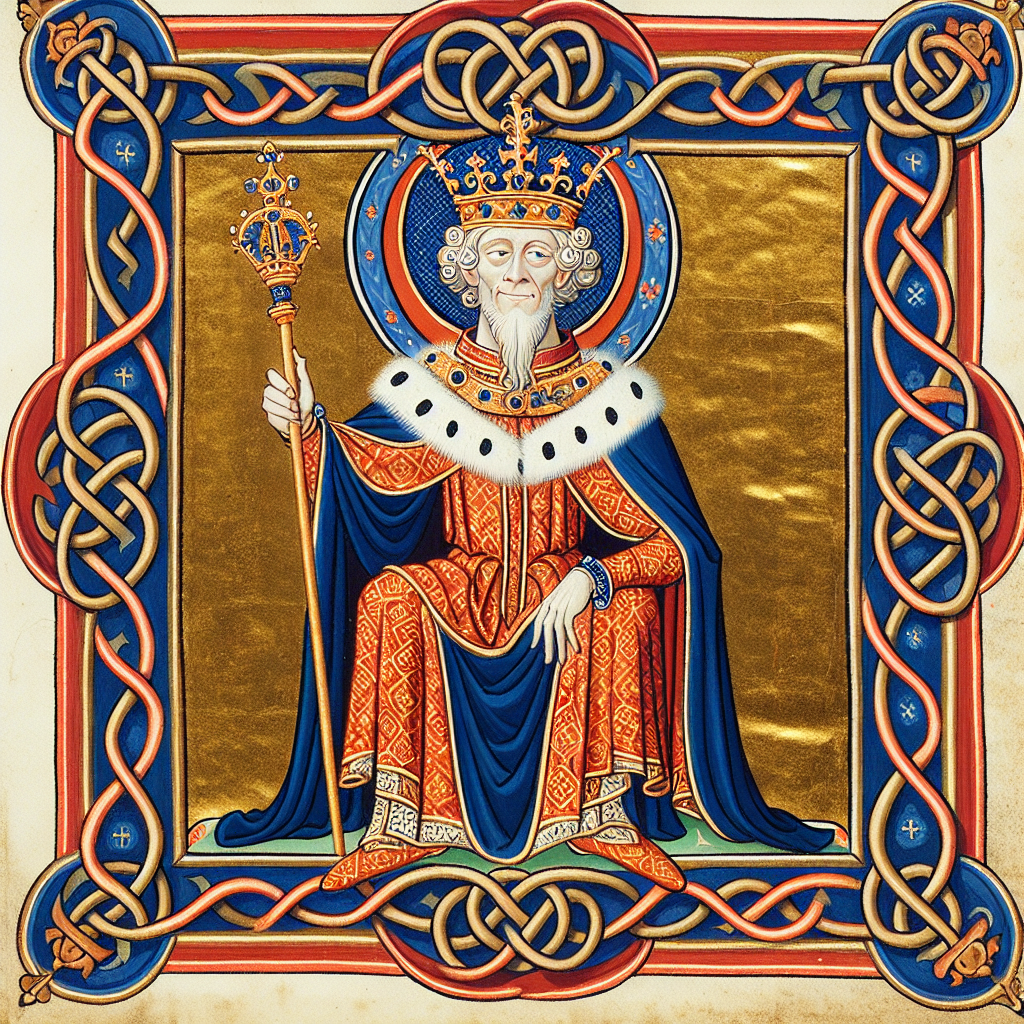
Update: finally found a contemporary portrait of Alfred the Great.
- Previously: Ivar the Boneless
- Next: Erik the Red
- Full list
Text and images copyright © 2020-2023 Laurie Voss
except where indicated
except where indicated